
Secondary Combustion Technology and Environmental Standards in Wood Fireplace Culture
How to Calculate Wood Fireplace KW Heat Output When Purchasing?
The innovations brought by the European Union's eco-design (Ecodesign) standards to indoor heating systems are carrying traditional heating habits to a much more environmentally friendly dimension. Thanks to the developed double combustion (clean burn) systems, wood fireplace inserts burn the smoke and carbon gases that could not be completely decomposed in the first combustion process again with fresh oxygen supplied from the top of the insert. This technology ensures that almost one hundred percent of the energy in the wood is converted into heat, while minimizing the amount of harmful gases and particles emitted from the chimney. Thus, the environment is protected and maximum efficiency is achieved. This green engineering, which also reduces soot buildup and the risk of clogging in chimneys, allows you to experience nature with modern norms, from rural houses to luxurious cities. To convert fuels obtained from sustainable forest management into heat with the highest efficiency and to optimize your budget, you can visit the https://eskimosomine.com/odunlu-somine digital platform and safely examine cast iron inserts and vertical hanging models that are fully compliant with new generation eco-design criteria.
Correct Draft Power and Chimney Top Installations in Wood Fireplace Chimneys
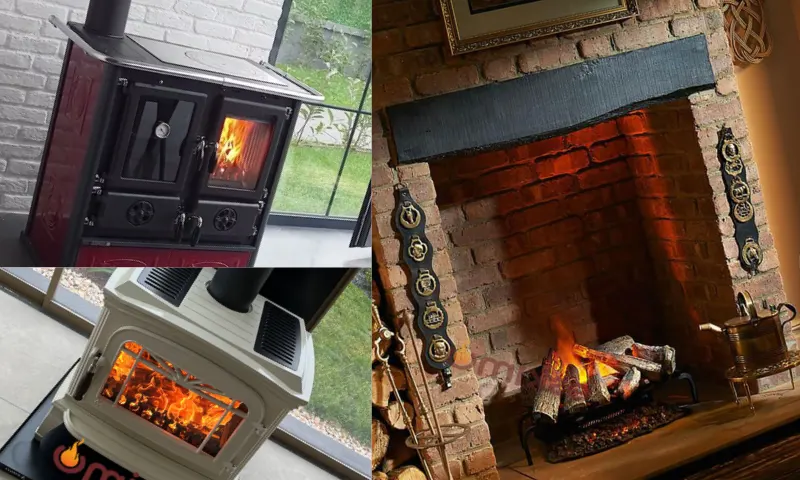
When planning a heating investment for your living spaces, you should focus not only on the visual design but also on the technical capacity of the device. Before purchasing a wood fireplace insert, the necessary KW (heat output) value must be calculated by analyzing the total volume (square footage and ceiling height) of the room where the unit will be installed by professional teams. Choosing an insert that is too large will lead to excessive heat and discomfort in the room; while a small capacity will be insufficient and increase fuel consumption. On average, 1 KW of heat output for every 10 square meters of area is an ideal efficiency threshold. The evacuation line of the system must be designed with perfect engineering so that the fire can burn clearly and stably, and smoke does not leak outside. In wood fireplace systems, the diameter of the chimney pipes must be perfectly compatible with the insert outlet size, and the use of horizontal elbows should be avoided as much as possible along the vertical line. Positioning the chimney cap, which terminates on the roof, at least 50 cm above the highest point of the building (cornice level) creates an ideal vacuum effect independent of the wind direction. This correct draft power prevents the glass from sooting while maximizing safety.