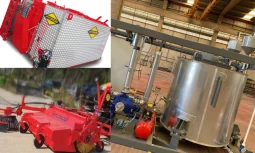
Compensation

Compensation Features
Compensation, as is known, is a tool or process used to prevent grid losses and heat losses, generally employed in central systems. Capacitors, while serving as storage, play a vital role in people's lives. Due to their quality, they ensure long-term use and are preferred in all areas. You can find information about their features, quality, reasonable prices, and usage areas at. Conductors are selected with a thinner cross-section to experience less loss.
Compensation Usage Areas
Compensation prevents heat losses and grid losses, storing them with capacitors. It increases the power transmission capacity of lines by carrying limited power due to voltage drop. This significantly reduces the production and sales cost of energy. The power of alternators and transformers is also kept much smaller. Losses and voltage drop on distribution lines can also be reduced. All these factors lead to reduced energy consumption, which also means reduced energy production. Simultaneously, control and protection elements are selected with very small values. It is responsible for providing advantages by significantly reducing cable sizes and losses. Although compensation is generally used in central systems, it can also be commonly used in offices, homes or buildings, large stores, and markets. Due to its many benefits and its ability to prevent energy loss, it is both recommended and frequently preferred. This function, which reduces the apparent power demand and provides further benefits, offers many advantages without harm, and does not cause harm to people's lives.